
2026-09-20 · Rick Malone
Why Clermont Pool Lights Flicker After Summer Thunderstorms
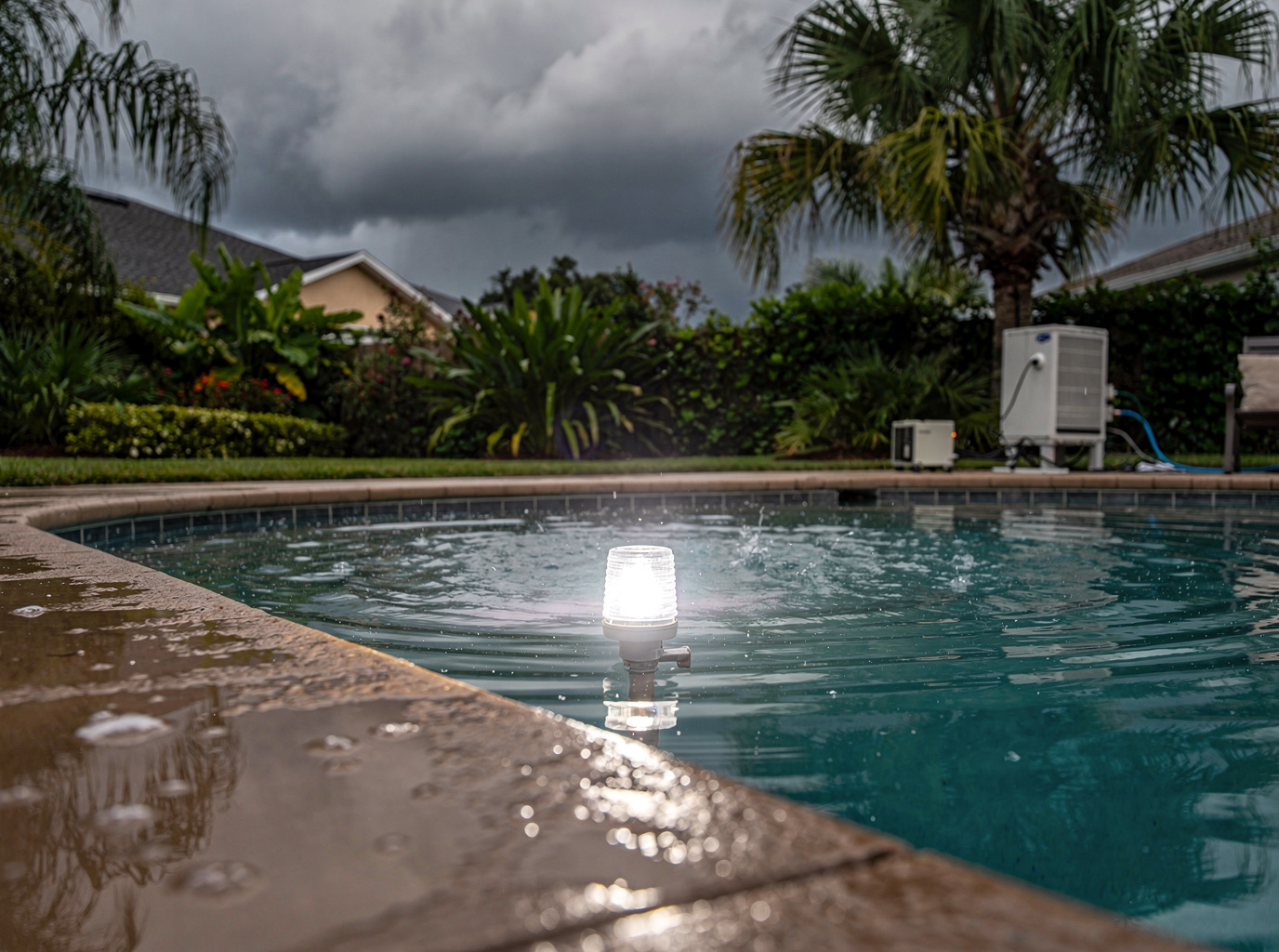
Pool lights in Clermont frequently flicker after summer thunderstorms because lightning strikes and sudden voltage spikes travel through Lake County power lines, overloading connections already stressed by high humidity and heat. These surges hit underwater fixtures hardest, especially in homes near Clermont Waterfront Park or the Citrus Tower where older electrical setups from the 1980s and 1990s still predominate. Moisture from heavy downpours then seeps into conduit and junction boxes, creating intermittent shorts that cause visible flickering.
Lightning-Induced Power Surges in Lake County
Summer thunderstorms in Clermont deliver frequent lightning that induces voltage spikes capable of reaching several thousand volts on pool circuits. Homes in the Clermont Historic District often retain original wiring that lacks modern surge protection, allowing these spikes to travel directly to pool light transformers and bulbs. The area's mild winters do little to offset the cumulative damage from repeated hot-season storms, leaving fixtures vulnerable each time thunder rolls through Downtown Clermont or Lake Highlands. Pool electricians here routinely trace flickering to failed surge arrestors or damaged GFCI breakers after a single intense event. Checking panel connections and replacing aged components prevents repeated trips to the same properties in neighborhoods like Greater Hills. Pool light repair addresses these surge-damaged fixtures before they fail completely during the next storm.
Moisture Intrusion into Underwater Fixtures
Clermont's humid subtropical climate brings heavy rainfall that penetrates pool light niches when seals degrade from years of sun exposure and chemical contact. Water reaches the lamp socket or wiring compartment, creating a path for current to arc and produce flicker. Properties near Lake Louisa State Park or along the waterfront experience higher groundwater levels that worsen this problem after storms. In Winter Garden and Leesburg homes with similar soil conditions, technicians see the same pattern: lights work until the next downpour then begin pulsing. Drying the niche, replacing gaskets, and applying dielectric grease stops the cycle. Regular inspection after each major storm catches early moisture before it corrodes brass or stainless components inside the fixture.
Grounding and Bonding Problems Amplified by Storms
Many Clermont pools built before updated codes lack proper bonding grids around the shell and deck, allowing stray voltage to build when lightning hits nearby trees or utility poles. The wet soil in Lake Highlands and Summit Greens conducts current more readily after rain, making flickering lights a warning sign of incomplete grounding. Technicians at 13208 Olesen Ct often find loose or corroded bonding lugs on older installations that only become evident post-storm. Proper pool bonding and grounding restores a low-resistance path that diverts surge energy safely. Without it, even small voltage differences cause visible flicker and create shock hazards around the pool deck.
Role of GFCI Protection After Heavy Rain
GFCI devices protecting pool circuits trip or weaken when moisture reaches the breaker panel or outdoor enclosure. In neighborhoods like Lost Lake Reserve and Waterbrooke, where irrigation keeps soil damp year-round, these devices see constant stress from humidity. After thunderstorms, a marginal GFCI may reset but still allow enough leakage current to make lights flicker. Testing the device monthly and replacing units older than 8–10 years prevents nuisance trips and hidden faults. GFCI and safety device service restores reliable protection tailored to Central Florida conditions.
Practical Steps and When to Seek Local Help
Start by noting whether flicker occurs only after rain or during every storm; the pattern points to moisture versus surge damage. Inspect visible conduit for cracks and ensure deck boxes remain sealed. For persistent issues, schedule a diagnostic visit rather than repeated bulb swaps. Related reading on typical repair costs in Clermont neighborhoods helps homeowners budget for fixes common in Lake County. Addressing these storm-related problems promptly keeps pools safe and lit through the rest of the season.